Backseat Offroad Mountain Map and Summit Routes
Biome bands, first-summit checklist, alpine village mindset, convoy pacing, and verifying lines after studio updates.
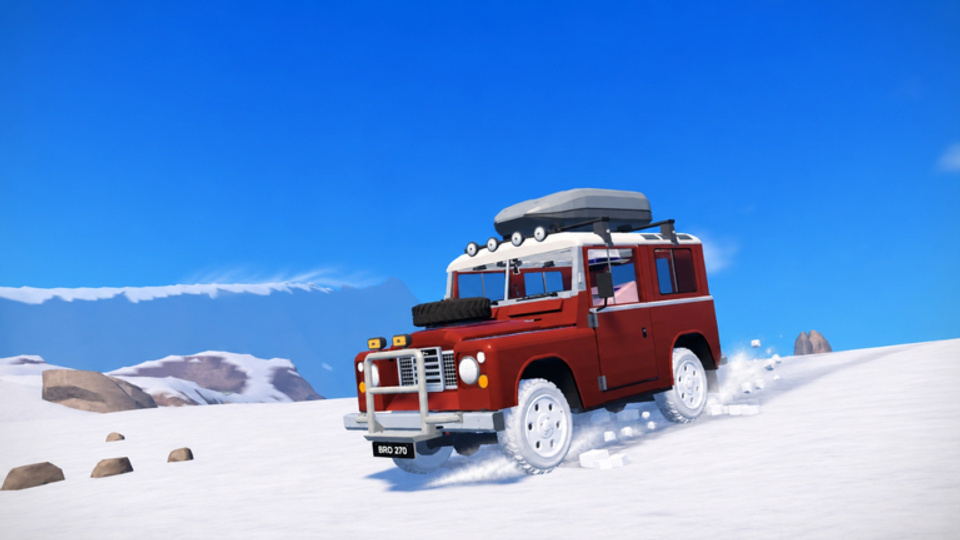
The Backseat Offroad map is a vertical story: lakeside forest at the bottom, rockier mid-mountain shelves, then snow and summit air. You crawl it in one of five old 4x4s with low range, differential lockers, winches, and optional lifts, snorkels, and engine swaps—plus a canoe for shoreline scouting and roughly one hundred hidden places along the way. Servers hold about twenty players. There is no stage timer. This is not Backseat Rally. Route craft means reading biome bands, packing a first-summit checklist, approaching the alpine village without fake GPS pins, pacing convoys, and re-verifying lines after studio updates.
Use this page with climbing tips, hidden places, Getting Started, canoe and water, co-op, and updates.
Biome band 1: lakeside forest
The lower map teaches forgiveness. Trails weave roots, soft shoulders, shallow water lips, and cabin-adjacent spurs. Failures here are usually cheap: a ditch winch, a gentle reverse, a laugh, a reset.
Goals in this band:
- Confirm low range and locker timing on mild climbs.
- Practice tree and friend winches before snow steals anchors.
- Use canoe put-ins to learn shoreline silhouettes and alternate trail cuts.
- Resist the urge to sprint every open dirt patch; polish and ruts follow you uphill.
New players should finish a calm lakeside loop from Getting Started before treating mid-mountain as a highway. Water-specific habits belong in canoe and water.
Biome band 2: rock mid-mountain
Rock stairs, off-camber shelves, and narrower one-lane climbs define the middle. Clearance matters more. Tip risk rises, especially after lifts. Momentum becomes a rare spice; crawl is the default meal.
Goals in this band:
- Place tires on highs; straddle ruts; scout on foot when you can.
- Cycle lockers for cross-axle moments, then unlock for tight forest turns.
- Keep convoy gaps so a slide has room.
- Log landmark memory—distinct trees, cabin roofs, colored rock faces—so you can reverse a route without inventing coordinates.
If belly scrapes dominate, consider a modest lift only after you understand tip points. If power feels short but placement is honest, an engine swap can wait until a known test hill recalibrates your foot. Line theory stays in climbing tips.
Biome band 3: snow and summit
Snow changes braking, steering, and winch-anchor quality. Packed tracks help and also create icy rails. Scenic drop-offs tempt bad parking near viewpoints. Whiteout camera moments punish hero throttle.
Goals in this band:
- Arrive already in low range; do not downshift mid-wheelspin.
- Steer early and small; abort early if the truck starts a slow slide.
- Prefer friend anchors on wind-packed patches when shrubs look weak.
- Treat summit viewpoints as explore-and-leave zones, not trophy parking on cornices.
The summit is a destination for patience, not a finish-line banner. Take the photo upright.
First-summit checklist
Before your first serious push above the rock band:
- Stock literacy done — low range and lockers feel automatic on a lakeside stair.
- Winch comfort — you can recover a high-center without panic.
- One intentional water abort — reverse discipline exists if a later ford appears on the approach.
- Mod honesty — if you lifted or swapped engines, you retested tip and throttle on a known hill.
- Buddy or plan — solo is fine, but a friend winch truck turns soft snow shelves from session-enders into stories.
- Turnaround rule — agree beforehand that weather, traffic jams, or three tippy moments means descend and retry later.
Skip the checklist and you will still “reach” high elevations—often on a door panel. Follow it and the same elevation feels earned.
Alpine village approach mindset (no fake GPS)
The alpine village is a landmark cluster players hunt among the wider set of hidden places—not a pin you should copy from an invented coordinate list. Approach it like an explorer:
- Watch for denser prop silhouettes, path scars, and lighting changes as elevation rises.
- Use ridge lines and cabin patterns as memory anchors instead of fabricated lat-long.
- Split roles: one driver on the main shelf, one spotter checking spur trails, optional canoe only if a lake shelf still feeds the approach.
- When you find it, landmark the route aloud for your group (“left at the split pine, stay on the wind-packed track”) so the next run is repeatable without spoiling discovery culture for everyone else.
Structured search patterns without fake pins live in hidden places. Village runs are one application of those patterns at altitude—not a separate cheat sheet.
Convoy pacing on the mountain
Up to roughly twenty players can share a server. Convoys shine when they behave like a slow train, not a demolition derby.
Pacing rules that work:
- Leader announces biome changes and locker calls.
- Middle mirrors tire tracks instead of inventing parallel ruts that destroy the only clean line.
- Tail carries recovery mindset—winch ready, not sightseeing AFK in the choke point.
- Gaps stay wide on snow and off-camber rock so a slide does not collect three trucks.
- One at a time on narrow stairs and fords; call “clear” after exit.
Voice helps; typed shorthand works: “locking,” “open,” “winch tree left,” “holding—traffic.” Broader etiquette and role ideas sit in co-op.
Reading routes without a minimap lecture
You do not need fabricated turn-by-turn spoiler sheets. You need habits:
- Climb until the biome language changes, then reassess tires, gear, and anchors.
- When lost, descend to the last confident landmark rather than inventing a side hill escape into a cliff.
- Alternate main-climb sessions with spur exploration so hidden places stay part of the fantasy instead of an afterthought checklist.
- Watch how other careful players line a stair; ignore the ones flooring it for comedy.
A mid-article climb video can show pacing and fail recovery tone—use it as mood and movement reference, then verify everything in your own lobby.
Post–November 20 verify-in-game note
Studio work continued after launch, including activity around 2026-11-20, without a detailed public changelog for every traction or prop tweak. Treat community route memory as a hint, not scripture. After any update pulse:
- Re-run your lakeside retest loop before trusting last week’s snow line.
- Confirm winch and locker binds still match your device habits.
- Skim updates for what is known, then prove questionable shelves yourself.
- If a “guaranteed” village approach suddenly walls out, assume the world shifted and re-scout with co-op eyes.
Living maps reward players who verify. Static rumor pins punish them.
Suggested multi-session route plan
Session A — Forest fluency: lakeside loop, one water scout, one intentional winch.
Session B — Rock literacy: mid-mountain stairs, locker cycling, convoy gaps with a friend.
Session C — Snow probe: short summit approach, early abort practice, viewpoint discipline.
Session D — Exploration day: hidden-place patterns, alpine village hunt mindset, canoe shoreline if the route still kisses water.
Rotate roles across sessions so nobody is always the tip recovery specialist.
Common map mistakes
- Skipping the forest band and blaming the game when snow flips you.
- Copying invented GPS pins instead of learning landmarks.
- Convoy nose-to-tail on ice with no recovery truck staged.
- Parking for screenshots on cornices and soft shoulders.
- Assuming a pre–update line still exists without a verify pass.
- Driving as if a Rally clock is running.
What to open next
Harden technique with climbing tips, hunt smart via hidden places, rebuild fundamentals in Getting Started if needed, handle wet shelves with canoe and water, coordinate people through co-op, and watch updates whenever the mountain feels different under your tires.
Read the biomes, climb in chapters, and verify after patches. That is how Backseat Offroad summit routes stay fun instead of becoming a flip montage.
Frequently Asked Questions
Quick answers for climbing, winching, and exploring the mountain.
What are the main biome bands on the map?
Lakeside forest at the bottom, rockier mid-mountain shelves next, then snow and summit terrain. Each band wants different pace, anchors, and tip awareness.
What should I finish before my first summit push?
Low range and locker fluency, winch comfort, one water abort, honest retests after mods, and a turnaround rule if the climb gets tippy.
How do I find the alpine village without GPS pins?
Use landmark thinking—path scars, prop density, ridge memory—and co-op spotting. Skip invented coordinates; verify finds in your own session.
How should a convoy pace the mountain?
Wide gaps, one-at-a-time on narrow stairs, a recovery-minded tail, and clear locker or winch callouts. Mirror tracks instead of carving parallel ruts.
Why verify routes after the November 20 studio activity?
Updates can change traction or props without a full public changelog. Retest known loops and treat old route memory as a hint only.
Is the mountain a timed race like Backseat Rally?
No. Backseat Offroad is an open crawl with recoveries and exploration. There is no stage timer on summit routes.